


DOI: 10.12890/2016_000502
Toxic Epidermal Necrolyisis and Sepsis
Authors
 dmdalves11@gmail.com
Keywords
Toxic epidermal necrolysis, Nikolsky’s sign, erythematous macules.Abstract
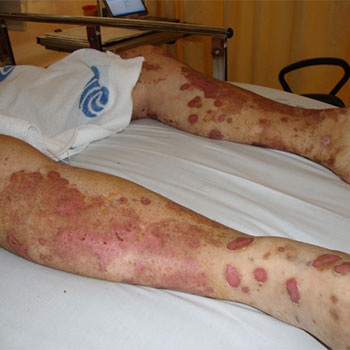
A 63-year-old male patient suffered from myalgia, arthralgia cough and erythematous macules, with confluence to the thorax, limbs, thighs and the scrotum. The erythematous macules evolved to blisters with a positive Nikolsky’s sign. A cutaneous biopsy revealed satellite cell necrosis. Administration of immunoglobulins resulted in a favourable evolution of the cutaneous lesions. Toxic epidermal necrolysis (TEN) is a rare and potentially fatal mucocutaneous disease. Early recognition, diagnosis and therapy are of the utmost importance.
Additional Files
References
- Oliveira A, Sanches M, Selores M. Stevens-Johnson syndrome and toxic epidermal necrolysis. Acta Med Port 2011;24 Suppl 4:995-1002.
- Ellender RP, Peters CW, Albritton HL, Garcia AJ, Kaye AD. Clinical considerations for epidermal necrolysis. Ochsner J 2014;14:413-7.
- Harr T, French LE. Toxic epidermal necrolysis and Stevens-Johnson syndrome. Orphanet J Rare Dis 2010;5:39.
- Mockenhaupt M, Viboud C, Dunant A, Naldi L, Halevy S, Bouwes Bavinck JN, et al. Stevens-Johnson syndrome and toxic epidermal necrolysis: assessment of medication risks with emphasis on recently marketed drugs. The EuroSCAR-study. J Invest Dermatol 2008;128:35-44.
- Paquet P, Jacob E, Damas P, Pierard GE. Treatment of drug-induced toxic epidermal necrolysis (Lyell's syndrome) with intravenous human immunoglobulins. Burns 2001;27:652-5.
Published
2016-11-28
Issue
How to Cite
1.
Alves DD, Lourenço N, Franco D, Calmeiro E, Silva R. Toxic Epidermal Necrolyisis and Sepsis. EJCRIM [Internet]. 2016 Nov. 28 [cited 2026 Nov. 3];3(7). Available from: https://ejcrim.com/index.php/ejcrim/article/view/502


