DOI: 10.12890/2024_004713
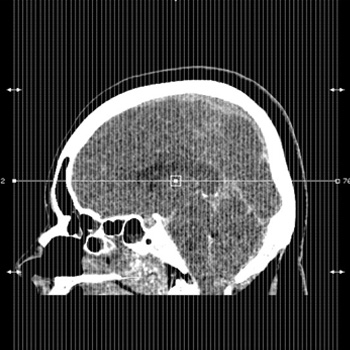
The great mimicker: a unique case of diffuse subarachnoid haemorrhage simulating acute myocardial infarction
Authors
 mgerges2207@gmail.com
Keywords
Subarachnoid haemorrhage, acute myocardial infarction, neurogenic stunned myocardium, electrocardiogram, ST-segment depressionAbstract
Subarachnoid haemorrhage (SAH) is a rare yet consequential medical emergency that may mimic an acute myocardial infarction (MI). SAH causes enhanced sympathetic activity, culminating in the development of neurogenic stunned myocardium (NSM), which presents as ST-segment deviations, prolonged QT intervals, T-wave inversions or Q-waves. Reperfusion therapy is contraindicated for SAH because of an increased risk of bleeding and death. Therefore, a prompt diagnosis is crucial. Here, we report a unique case of massive SAH presenting as diffuse ST-segment deviation simulating an acute MI. Our patient was brought to the emergency department after a cardiac arrest and died on day 2 of admission.
References
- Parker H, El-Medany A, Crossley R. Acute ECG changes in a woman presenting to coronary care with fluctuating consciousness. JRSM Open 2022;13:2054270422112348.
- Levine HD. Non-Specificity of the electrocardiogram associated with coronary artery disease. Am J Med. 1953 Sep;15(3):344-55.
- Weintraub BM, McHenry LC Jr. Cardiac abnormalities in subarachnoid hemorrhage: a resumé. Stroke 1974;5:384–390.
- Aikhionbare I, Gruber M, Gopalakrishnan P. Subarachnoid hemorrhage masquerading as ST elevation. JACC 2022;79:2477.
- Wei Ting W, Lai PF, Chang H. Subarachnoid hemorrhage–induced out-of-hospital cardiac arrest patients with ST-segment elevation from the electrocardiogram: two case reports. Hong Kong J Emerg Med 2019;28:320–323.
- Yogendranathan N, Herath HM, Pahalagamage SP, Kulatunga A. Electrocardiographic changes mimicking acute coronary syndrome in a large intracranial tumour: a diagnostic dilemma. BMC Cardiovasc Disord 2017;17:91.
- Heo WJ, Kang JH, Jeong WS, Jeong MY, Lee SH, Seo JY, et al. Subarachnoid hemorrhage misdiagnosed as an acute ST elevation myocardial infarction. Korean Circ J 2012;42:216–219.
- Amodio S, Bouzat P, Robba C, Taccone FS. Rethinking brain injury after subarachnoid hemorrhage. Crit Care 2020;24:612.
- Sakamoto H, Nishimura H, Imataka K, Ieki K, Horie T, Fujii J. Abnormal Q wave, ST-segment elevation, T-wave inversion, and widespread focal myocytolysis associated with subarachnoid hemorrhage. Jpn Circ J 1996;60:254–257.
- Köklü E, Yüksel IÖ, Bayar N, Kücükseymen S, Arslan S. Subarachnoid hemorrhage that electrocardiographically mimics acute coronary syndrome: a case report. Turk Kardiyol Dern Ars 2015;43:730–733.
- Chen HY. Angiographic coronary spasm in a case of spontaneous subarachnoid hemorrhage mimicking acute myocardial infarction. Cardiol Res 2013;4:74–77.
- Rouanet C, Silva GS. Aneurysmal subarachnoid hemorrhage: current concepts and updates. Arq Neuropsiquiatr 2019;77:806–814.
Published
2024-07-04
Issue
Categories
How to Cite
1.
Gerges M, Bathobakae L, Mahmoud A, Saad R, Elkattawy S, Shamoon F, et al. The great mimicker: a unique case of diffuse subarachnoid haemorrhage simulating acute myocardial infarction. EJCRIM [Internet]. 2024 Jul. 4 [cited 2026 Nov. 5];11(8). Available from: https://ejcrim.com/index.php/ejcrim/article/view/4713