DOI: 10.12890/2024_004666
Look past the bleed! A case of non-traumatic thoracic aortic pseudoaneurysm presenting as haemoptysis
Authors
 fawwadalam@live.com
Keywords
Haemoptysis, pseudoaneurysm, aorta, atherosclerosis, cardiovascular surgeryAbstract
Introduction: Aortic pseudoaneurysms are a type of contained rupture where most of the aortic wall is breached, leaving only a thin rim of the remaining wall or adventitia to hold the blood. This condition carries a high risk of rupture and potentially fatal complications. Typically, patients present with chest pain; haemoptysis can also occur, though rarely.
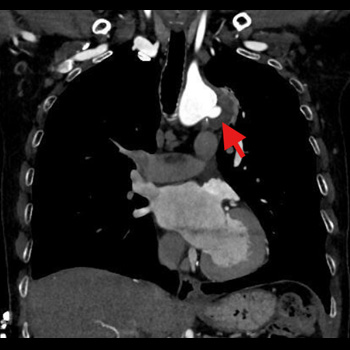
Case description: A 64-year-old male who presented with two episodes of haemoptysis, with no history of cardiovascular surgery or trauma. A chest computerized tomography (CT) followed by an aortogram revealed a thoracic aortic pseudoaneurysm and the patient underwent surgical aortic repair without any complications. This case underscores the rare presentation of thoracic aortic pseudoaneurysm.
Discussion: Haemoptysis is a rare manifestation of thoracic aorta pseudoaneurysm and can be a warning sign of impending rupture. Haemoptysis may occur due to formation of aortopulmonary fistula or direct erosion of pseudoaneurysm into lung parenchyma.
Conclusion: It is imperative for clinicians to recognise such manifestations early for prompt diagnosis and prevention of complications.
References
- Rivera PA, Dattilo JB. Pseudoaneurysm. [Updated 2024 Feb 17]. In: StatPearls [Internet]. Treasure Island (FL): StatPearls Publishing; 2024 Jan-.
- Ali R, Elhosiny A, Abualnaja S, Baslaim G. Incidental finding of an aspergillus pseudoaneurysm in the ascending aorta of an immunocompetent patient. Int Med Case Rep J 2021;14:843–847.
- Stamou SC, Conway BD, Nores MA. Management of aortic pseudoaneurysms: evolving concepts and controversies. Aorta (Stamford) 2020;8:1–5.
- Natour M, Endovascular treatment of ascending and thoracic aortic arch pseudoaneurysm. J Vasc Surg 2019;70:e155. Available at: https://www.jvascsurg.org/article/S0741-5214(19)32037-3/pdf
- Rodríguez-Hidalgo LA, Concepción-Urteaga LA, Hilario-Vargas JS, Ruiz-Caballero DC. Hemoptysis as a warning sign of thoracic aorta pseudoaneurysm: a case report. Medwave 2021;21:e8112. Spanish, English.