DOI: 10.12890/2024_004381
Anticholinergic toxidrome due to thorn apple seed ingestion in an elderly couple
Authors
 bram.kok@radboudumc.nl
Keywords
Anticholinergic toxidrome, physostigmineAbstract
Introduction: Sudden onset of reduced consciousness, psychomotor agitation and mydriasis are all indicative of an anticholinergic toxidrome. It is important to note that numerous drugs, as well as certain herbs and plants, possess anticholinergic properties.
Case description: An 84-year-old female patient had sudden nocturnal onset of uncoordinated hand movements and altered mental status. Shortly after, the patient’s 83-year-old husband developed symptoms of dysarthria, gait ataxia, vertigo, and delirium.
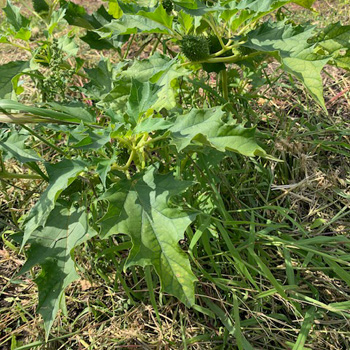
Conclusion: Anticholinergic syndrome consists of a combination of central and peripheral anticholinergic symptoms. Physostigmine given intravenously resulted in rapid reversal of symptoms. Thorn apple seeds had been accidentally ingested and were identified as the cause.
References
- Caulfield MP, Birdsall NJ. International Union of Pharmacology. XVII. Classification of muscarinic acetylcholine receptors. Pharmacol Rev 1998;50:279–290.
- Wang GS, Baker K, Ng P, Janis GC, Leonard J, Mistry RD, et al. A randomized trial comparing physostigmine vs lorazepam for treatment of antimuscarinic (anticholinergic) toxidrome. Clin Toxicol (Phila) 2021;59:698–704.
- Murray L, Little M, Pascu O, Hoggett K. Toxicology Handbook, Elsevier Australia 2015, p. 444-445.
- Dawson AH, Buckley NA. Pharmacological management of anticholinergic delirium – theory, evidence and practice. Br J Clin Pharmacol 2016;81:516–524.