Oxymetazoline-associated refractory atrial fibrillation
1 Department of Internal Medicine, Saint Michael’s Medical Center, New York Medical College, Newark, USA
2 Division of Cardiology, Department of Internal Medicine, Saint Michael’s Medical Center, New York Medical College, Newark, USA
Corresponding author’s e-mail: abdfarroujeh@hotmail.com
Received: 16/09/2026
Accepted: 25/09/2026
Published: 03/11/2026
Conflicts of Interests: The Authors declare no conflict of interest.
Patient Consent: Written informed consent for the publication of this case was obtained from the patient.
This article is licensed under a CC Attribution-NonCommercial-NoDerivatives 4.0 License
How to cite this article: Farouji A, Umer M, Battah A, Touza M, Farouji I. Oxymetazoline-associated refractory atrial fibrillation. EJCRIM 2026;13:doi:10.12890/2026_007528
ABSTRACT
Introduction: Oxymetazoline is a widely used over-the-counter topical nasal decongestant that is generally perceived as safe. Although systemic cardiovascular adverse effects have been reported, clinically significant arrhythmias remain rare.
Case description: A 64-year-old man with diabetes and hypertension developed new-onset atrial fibrillation with a rapid ventricular response up to 180 bpm. This arrhythmia was refractory to pharmacological and synchronized electrical cardioversion, necessitating intensive care unit admission for refractory arrhythmia and hypoxic respiratory failure. Further history revealed oxymetazoline nasal spray use for several days prior to presentation. Following discontinuation of oxymetazoline, sustained conversion to sinus rhythm occurred and was maintained at 6-month follow-up.
Discussion: This case underscores the potential for serious cardiovascular effects of topical nasal decongestants that may be underrecognized because of their over-the-counter availability. While atrial fibrillation has been reported with other imidazoline-containing nasal decongestants, oxymetazoline-associated atrial fibrillation refractory to standard pharmacologic and electrical cardioversion requiring intensive care unit admission has not been previously reported, to our knowledge.
Conclusion: This case highlights a rare but potentially severe arrhythmogenic complication of oxymetazoline nasal spray. Clinicians should consider over-the-counter topical medications as potential contributors in patients presenting with unexplained or refractory atrial fibrillation.
KEYWORDS
Oxymetazoline, atrial fibrillation, nasal decongestants, drug-induced arrhythmia, intensive care unit
LEARNING POINTS
- Over-the-counter topical nasal decongestants, including oxymetazoline, can be associated with serious cardiovascular adverse effects, including atrial fibrillation, and should be used cautiously in patients with cardiovascular comorbidities.
- Oxymetazoline-associated atrial fibrillation can present with resistance to standard pharmacologic and electrical cardioversion and may require intensive care management; to our knowledge, such a refractory presentation requiring intensive care unit-level care has not been previously reported.
- Thorough medication reconciliation, including non-prescription and topical agents, is essential in patients presenting with unexplained or refractory atrial fibrillation. When drug-induced atrial fibrillation is suspected, prompt identification and withdrawal of the potential pharmacologic trigger should accompany standard rate- and rhythm-control strategies.
INTRODUCTION
Topical nasal decongestants are widely used medications for the relief of nasal congestion and are generally perceived as safe[1]. Oxymetazoline, an imidazoline-derived α-adrenergic agonist, exerts its effect through local vasoconstriction; however, systemic absorption may occur, leading to sympathomimetic effects[2]. Although cardiovascular adverse events have been reported, clinically significant arrhythmias remain rare[3]. We report a case of oxymetazoline-associated atrial fibrillation (AF) refractory to both pharmacologic and electrical cardioversion, requiring intensive care unit management and highlighting a potentially underrecognized arrhythmogenic effect of this commonly used over-the-counter medication.
CASE DESCRIPTION
A 64-year-old man with diabetes and hypertension presented with a one-week history of dyspnoea and cough. His body mass index was 24.4 kg/m2. He reported no alcohol use and had no history of obstructive sleep apnoea. His medications were metformin 1000 mg twice daily and losartan 25 mg daily. On presentation, he was tachycardic at 100 bpm in sinus rhythm; blood pressure and oxygen saturation were normal. There was no clinical evidence of active infection. The white blood cell count was 7.3 ×10⁹/l and C-reactive protein was 0.4 mg/dl. Laboratory tests, including troponin, B-type natriuretic peptide, and thyroid-stimulating hormone, were unremarkable, and electrolytes were within normal limits. His CHA2DS2-VASc score was 2, based on hypertension and diabetes mellitus. Electrocardiogram showed sinus rhythm with frequent premature ventricular contractions and no ST-T changes. Transthoracic echocardiography revealed normal cardiac function and excluded structural heart disease.
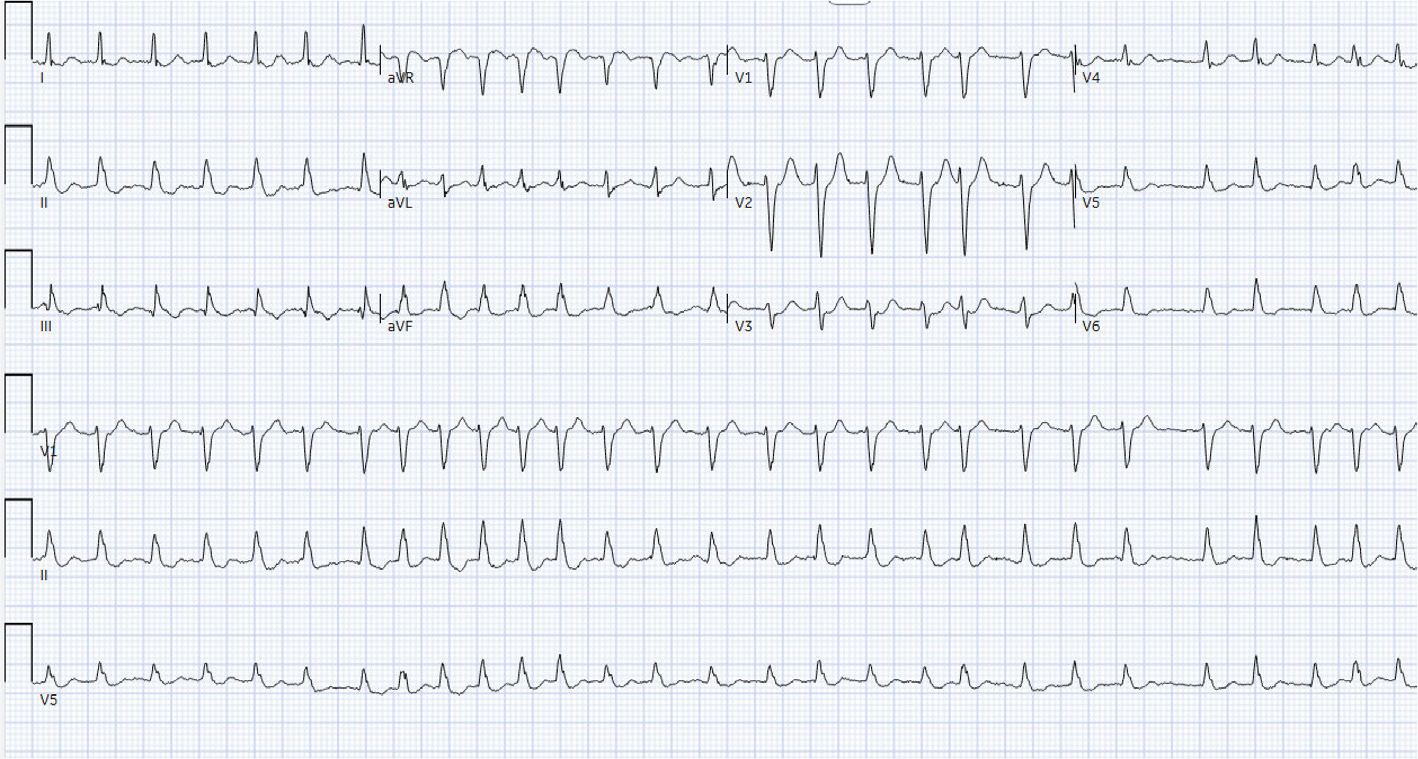
The following day, he developed new-onset AF with a rapid ventricular response reaching 180 bpm (Fig. 1). Despite treatment with oral diltiazem and amiodarone, the arrhythmia persisted with inadequate rate control. He subsequently developed acute hypoxic respiratory failure, with oxygen saturation decreasing to 84%. Chest radiography demonstrated pulmonary vascular congestion without evidence of pneumonia. He was treated with intravenous furosemide 60 mg twice daily and required bilevel positive airway pressure with a fraction of inspired oxygen of 40%. At the time of intensive care unit (ICU) transfer, his heart rate ranged from 160 to 180 bpm and blood pressure was 110–125/70–80 mmHg. He was admitted to the ICU for continuous cardiac monitoring, intravenous antiarrhythmic therapy, and advanced rhythm management. In the absence of fever or radiographic evidence of pneumonia, together with a normal D-dimer, the respiratory failure was attributed to cardiogenic pulmonary congestion from acute decompensated heart failure precipitated by uncontrolled AF.
(click to enlarge)
Figure 1. Twelve-lead electrocardiogram showing atrial fibrillation with rapid ventricular response (approximately 170–180 bpm). Paper speed 25 mm/s; voltage calibration 10 mm/mV.
In the ICU, intravenous diltiazem was administered at 0.25 mg/kg, followed by 0.35 mg/kg for inadequate rate control, and subsequently continued as an infusion at 5–15 mg/hour. Intravenous amiodarone was administered as a 150 mg loading dose over 10 minutes, followed by an infusion at 1 mg/min for 6 hours and 0.5 mg/min thereafter. Despite pharmacologic therapy, AF with rapid ventricular response persisted. Synchronized electrical cardioversion was performed the following day, with two biphasic attempts at 200 J and 300 J. The 300-J attempt restored sinus rhythm; however, AF recurred within 30 minutes.
Further history revealed that the patient had initiated oxymetazoline hydrochloride 0.05% nasal spray approximately 4 days prior to presentation. He reported no prior use of oxymetazoline. For symptom relief, he used two sprays per nostril per administration, up to four times daily, exceeding the recommended dosing frequency. He continued using the spray during hospitalization, including during the period of refractory atrial fibrillation. No other sympathomimetic or stimulant exposure was identified.
Oxymetazoline was subsequently discontinued, and sustained conversion to normal sinus rhythm occurred the following day. Sinus rhythm was maintained without recurrence over 6 months of follow-up and without the need for ongoing rate- or rhythm-control therapy.
The temporal relationship between oxymetazoline exposure and onset of atrial fibrillation, persistence of the arrhythmia while exposure continued, sustained conversion following drug withdrawal, and absence of recurrence during six months of follow-up support a probable causal association (Naranjo score=7).
DISCUSSION
Nasal congestion is a common condition, affecting approximately 30% of the general population[1]. Topical nasal decongestants provide rapid and effective symptomatic relief; however, their over-the-counter availability increases the risk of unsupervised use, including dosing at higher frequencies and for longer durations than recommended[1].
Oxymetazoline is a topical imidazoline-derived α1- and α2-adrenergic agonist commonly used as an over-the-counter nasal decongestant[2]. When applied locally, oxymetazoline induces vasoconstriction of vascular smooth muscle; however, systemic sympathomimetic effects have been reported and may occur even with topical administration[3]. Frequent or excessive administration may increase systemic exposure. In the setting of inflamed nasal mucosa, disruption of the mucosal barrier may increase systemic absorption, although the magnitude of this effect with oxymetazoline is not well established[3]. Systemic adrenergic stimulation may alter autonomic balance and create an arrhythmogenic environment. Increased sympathetic activity may enhance atrial automaticity and triggered activity through altered calcium handling, while autonomic dysregulation and heterogeneity in atrial refractoriness may facilitate AF initiation and maintenance. Electrical and structural atrial remodelling may further contribute to the substrate that promotes AF persistence and recurrence[4]. Beyond these mechanisms, non-pulmonary vein triggers may also contribute to AF recurrence; in patients with recurrent AF despite durable pulmonary vein isolation, potential sites include the superior vena cava, coronary sinus, left atrial posterior wall, and ligament of Marshall[5].
Systemic inflammation may also contribute to AF initiation and recurrence through atrial fibrosis, electrical and structural remodelling, and autonomic dysregulation[6]. Inflammatory biomarkers have been investigated as potential predictors of AF recurrence, with elevated inflammatory indices associated with recurrence after catheter ablation[7]. However, the relationship between inflammation and AF is complex, and whether inflammation represents a cause or consequence of AF remains uncertain[6]. In our patient, however, there was no clinical or laboratory evidence of significant systemic inflammation.
A literature search of PubMed and Google Scholar was performed through September 2026 using combinations of the terms “oxymetazoline,” “nasal decongestant,” “atrial fibrillation,” “arrhythmia,” “cardioversion,” and “intensive care.” Although generally considered safe, oxymetazoline has been associated with cardiovascular adverse effects, including hypertension, bradycardia, and near syncope; clinically significant arrhythmias are rarely reported[8]. A case of severe hypertension with reflex bradycardia progressing to cardiac arrest following intranasal oxymetazoline use has been reported in a 2-year-old patient[9]. Ventricular tachycardia associated with topical oxymetazoline use in an adult with a cardiac fibroma[10] and non–ST-segment elevation myocardial infarction following oxymetazoline nasal spray use have also been described[11]. In 2016, AF associated with long-term use of tramazoline-containing nasal decongestants was reported in a 60- and 62-year-old couple; both cases were resistant to electrical cardioversion but were managed in the outpatient setting and resolved after discontinuation of tramazoline[12].
In contrast, our patient developed AF with a rapid ventricular response of up to 180 bpm after 4 days of oxymetazoline nasal spray use. The arrhythmia persisted despite pharmacologic therapy and synchronized electrical cardioversion and was complicated by hypoxic respiratory failure requiring non-invasive ventilatory support and ICU-level care. Sustained sinus rhythm occurred following discontinuation of oxymetazoline. Although the temporal association between oxymetazoline exposure and the arrhythmia, followed by sustained resolution after discontinuation, supports a drug-related contribution, the patient’s hypertension and diabetes were baseline risk factors for AF and may have increased his underlying atrial susceptibility. Thus, oxymetazoline may have acted as a precipitating trigger rather than the sole cause of the arrhythmia. To our knowledge, a similarly severe presentation of oxymetazoline-associated AF refractory to both pharmacologic and electrical cardioversion and requiring ICU-level care has not been previously reported.
CONCLUSION
This case highlights the potential for serious arrhythmogenic effects associated with sympathomimetic nasal decongestants. Caution is warranted, particularly in patients with underlying cardiovascular disease. Although rare, oxymetazoline-associated AF can result in significant morbidity and may necessitate critical care management. Thorough medication reconciliation, including over-the-counter topical agents, is essential in patients presenting with unexplained or refractory AF.