Tirzepatide-induced gastroparesis with prolonged recovery
1 Department of Internal Medicine, Dr KNS Memorial Institute of Medical Sciences, Barabanki, India
2 Department of Internal Medicine, FMH College of Medicine & Dentistry, Lahore, Pakistan
3 Department of Pulmonary Medicine, Tbilisi State Medical University, Tbilisi, Georgia
Corresponding author’s e-mail: Drtanujsmmanagement@gmail.com
Received: 02/09/2026
Accepted: 21/09/2026
Published: 20/11/2026
Conflicts of Interests: The Authors declare no conflict of interest.
Patient Consent: Written informed consent was obtained from the patient for the publication of this case report, including all relevant clinical history and investigations.
Acknowledgments: The authors gratefully acknowledge the patient for providing consent and the nursing staff for their dedicated care.
This article is licensed under a CC Attribution-NonCommercial-NoDerivatives 4.0 License
How to cite this article: Diyora T, Rehman MZU, Ogli AK. Tirzepatide-induced gastroparesis with prolonged recovery. EJCRIM 2026;13:doi:10.12890/2026_007493
ABSTRACT
Background: Tirzepatide, a first-in-class dual glucose-dependent insulinotropic polypeptide (GIP) and glucagon-like peptide-1 (GLP-1) receptor agonist, has emerged as a potent agent for the management of type 2 diabetes mellitus (T2DM) and obesity. Delayed gastric emptying is a recognised pharmacological effect of incretin-based therapies; however, frank drug-induced gastroparesis with an unusually prolonged clinical course has been infrequently reported for tirzepatide.
Case description: We describe a 52-year-old man with T2DM and obesity who developed debilitating nausea, recurrent non-bilious vomiting, early satiety, and an 8-kg weight loss over 4 weeks following escalation of tirzepatide to 10 mg weekly. Mechanical obstruction was excluded by upper gastrointestinal endoscopy, and gastric emptying scintigraphy confirmed markedly delayed solid gastric emptying with 58% meal retention at 4 hours. Tirzepatide was discontinued, and treatment with oral metoclopramide and dietary modification was initiated. Despite cessation of the offending agent, symptomatic and objective resolution did not occur until approximately 9 weeks after discontinuation, suggesting a prolonged neuromotor recovery trajectory beyond standard pharmacokinetic expectations.
Conclusion: This case highlights tirzepatide as a cause of clinically significant, potentially long-lasting gastroparesis. Clinicians should recognise that recovery after drug discontinuation may be protracted. Early identification, patient education, and judicious dose escalation are essential safety measures for this increasingly prescribed medication.
KEYWORDS
Tirzepatide, gastroparesis, delayed gastric emptying, glucagon-like peptide-1 (GLP-1) receptor agonist, glucose-dependent insulinotropic polypeptide (GIP) receptor agonist
LEARNING POINTS
- Tirzepatide, a dual glucose-dependent insulinotropic polypeptide/glucagon-like peptide-1 receptor agonist, can precipitate clinically significant gastroparesis—not merely physiological gastric slowing requiring prompt recognition and discontinuation.
- Recovery from tirzepatide-induced gastroparesis may be substantially prolonged (up to 9 weeks or more) beyond the expected 1-3-week pharmacokinetic washout period, possibly reflecting transient enteric neuroplastic changes.
- Internists prescribing tirzepatide should counsel patients regarding gastrointestinal symptoms, monitor for gastroparesis, especially with dose escalation, and ensure alternative glycaemic therapy is in place before discontinuation.
INTRODUCTION
Tirzepatide is the first approved dual glucose-dependent insulinotropic polypeptide (GIP) and glucagon-like peptide-1 (GLP-1) receptor agonist. It received United States Food and Drug Administration (FDA) approval for type 2 diabetes mellitus (T2DM) in May 2022 and for chronic weight management in obesity in November 2023[1]. Structurally, tirzepatide is a 39-amino acid acylated synthetic peptide with a molecular weight of approximately 4.8 kDa and an extended plasma half-life of approximately 5 days, enabling once-weekly subcutaneous dosing[2]. The dual agonism at both the GIP receptor and GLP-1 receptor yields synergistic effects on glycaemic control, appetite suppression, and body weight reduction that surpass those achievable with selective GLP-1 receptor agonists alone[3]. However, activation of GLP-1 receptors on vagal afferents and enteric neurons meaningfully retards gastric emptying—a pharmacological effect that is mechanistically linked to satiety, but which can become pathological in susceptible individuals[4]. Gastroparesis is defined as delayed gastric emptying of solid food in the absence of mechanical obstruction, accompanied by cardinal symptoms of nausea, vomiting, early satiety, postprandial fullness, and abdominal bloating[5]. While several GLP-1 receptor agonists including semaglutide have been implicated in drug-induced gastroparesis, published case data on tirzepatide-specific gastroparesis with detailed documentation of recovery kinetics remain sparse. We report a case of tirzepatide-induced gastroparesis with an unexpectedly prolonged recovery course of approximately 9 weeks following drug cessation, and we discuss the possible mechanistic and clinical implications.
CASE DESCRIPTION
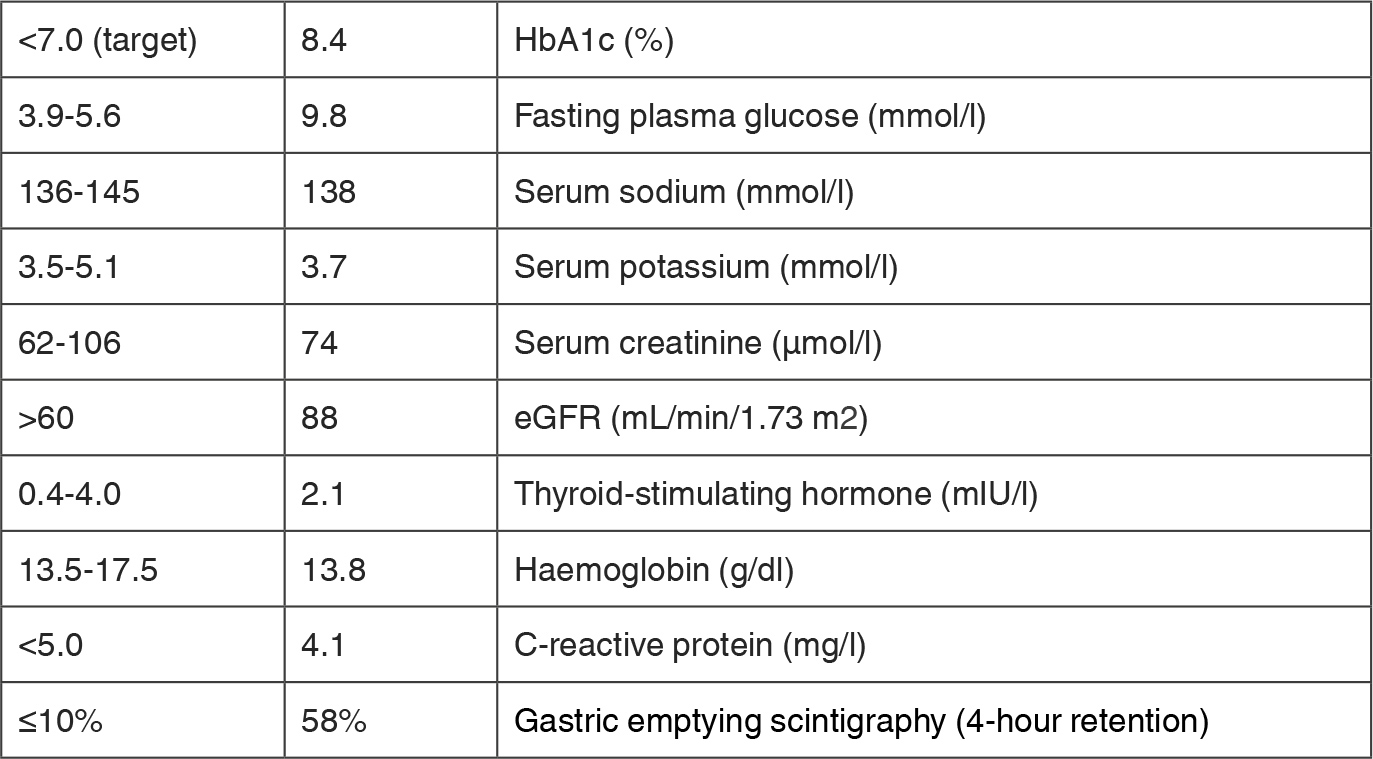
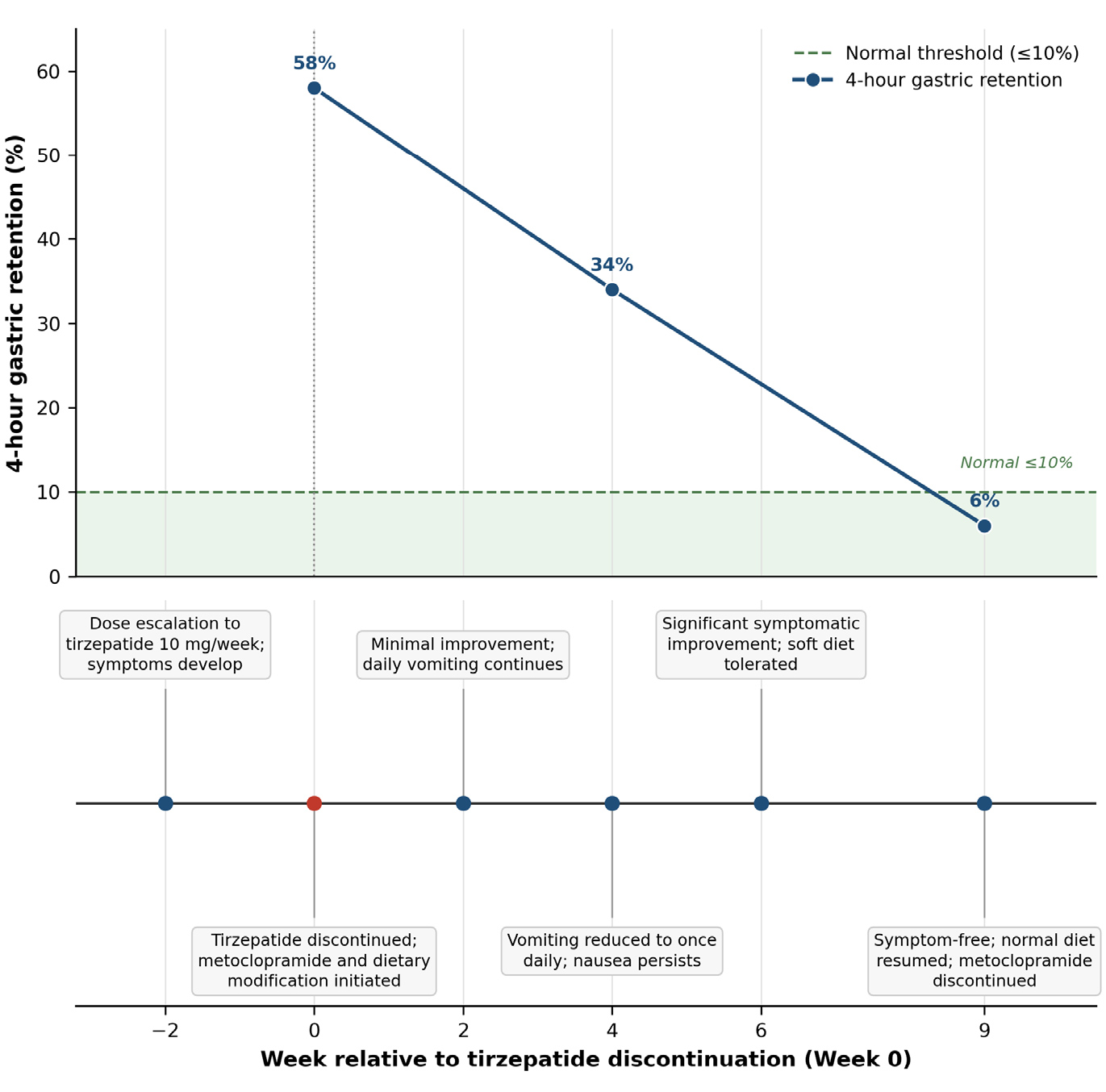
A 52-year-old male with a 9-year history of T2DM and class II obesity (body mass index 36.2 kg/m2) was referred to our internal medicine clinic for evaluation of persistent nausea and vomiting. His background anti-diabetic regimen comprised metformin 1000 mg twice daily and empagliflozin 10 mg once daily, with a baseline glycated haemoglobin (HbA1c) of 8.4%. Tirzepatide was initiated 14 weeks prior to his presentation: the dose was started at 2.5 mg subcutaneously once weekly and escalated monthly per standard protocol to 5 mg, and then to 10 mg weekly at week 9. He denied a prior diagnosis of gastroparesis, diabetes-related autonomic neuropathy, thyroid dysfunction, or connective tissue disease. He had no history of gastric or abdominal surgery and was not taking any medications known to impair gastric motility, such as opioids or tricyclic antidepressants. Approximately two weeks after the 10 mg dose escalation, the patient developed worsening nausea, non-bilious vomiting occurring 3-4 times daily, early satiety after only a few bites of food, and significant postprandial epigastric fullness and bloating. Over 4 weeks, he lost approximately 8 kg. He reported no dysphagia, haematemesis, or melena. Physical examination revealed mild epigastric tenderness on deep palpation; a succussion splash was not elicited. Vital signs were stable. Investigations at presentation are summarised in Table 1. Of note, serum electrolytes, thyroidstimulating hormone, and complete blood count were within normal limits. Upper gastrointestinal (GI) endoscopy demonstrated no mucosal lesion, no pyloric stenosis, and no evidence of gastric outlet obstruction; food residue was observed in the stomach despite an 8- hour fast. Abdominal ultrasonography was unremarkable. Gastric emptying scintigraphy was performed using a standardised solid-meal protocol (9mTc-sulphur colloid-labelled scrambled egg), with imaging at 1, 2, and 4 hours. The study demonstrated 58% of the radiolabelled meal remaining in the stomach at 4 hours (normal range ≤10%), consistent with markedly delayed gastric emptying and confirming the diagnosis of gastroparesis[5]. Tirzepatide was immediately discontinued. Metformin was continued, and insulin glargine 10 units at bedtime was commenced for glycaemic maintenance. Dietary modification was prescribed, consisting of small, frequent, low-fat, low-fibre meals. Oral metoclopramide 10 mg three times daily before meals was initiated as a prokinetic agent in accordance with current guidelines[6]. An antiemetic (ondansetron 4 mg, as needed) was prescribed for symptomatic relief. The patient was reviewed at weekly intervals. At week 2 after discontinuation, symptoms showed minimal improvement; he continued to experience daily nausea and vomiting. At week 4, vomiting frequency had decreased to once daily, but postprandial fullness and nausea persisted. Repeat gastric emptying scintigraphy at week 4 showed 34% retention at 4 hours, still in the moderately delayed range. By week 6, the patient reported a significant reduction in nausea and was tolerating a soft diet. At week 9 following tirzepatide discontinuation, the patient was symptom-free on a regular diet, with a repeat scintigraphy demonstrating normal gastric emptying (6% retention at 4 hours). Metoclopramide was tapered and discontinued at this point. HbA1c at 10-week follow-up was 7.8% on the modified regimen. Figure 1 summarises these findings.
(click to enlarge)
Table 1. Selected investigations at the time of initial presentation.
Abbreviations: HbA1c, glycated haemoglobin; eGFR, estimated glomerular filtration rate.
(click to enlarge)
Figure 1. Clinical course and gastric emptying findings following tirzepatide discontinuation.
Serial 4-hour gastric retention on gastric emptying scintigraphy, obtained at presentation (week 0), week 4, and week 9, demonstrating progressive normalization from 58% to 34% to 6%. The dashed horizontal line and shaded region denote the normal threshold for 4-hour retention (≤10%). The dotted vertical line marks week 0, the date of tirzepatide discontinuation.
Corresponding timeline of clinical status and management milestones, from dose escalation to tirzepatide 10 mg/week (week −2) through symptom resolution and metoclopramide discontinuation (week 9). The red marker denotes the index presentation (week 0); blue markers denote subsequent follow-up timepoints. Week 0 denotes the date of tirzepatide discontinuation.
DISCUSSION
To the best of our knowledge, this is one of the first detailed reports of tirzepatide-associated gastroparesis with systematic documentation of a prolonged 9-week recovery trajectory following drug discontinuation. This clinical observation adds to a growing body of evidence suggesting that GLP-1 pathway activation, whether via selective GLP-1 receptor agonists or dual GIP/GLP-1 receptor agonists, can precipitate pathological gastroparesis in predisposed individuals, with a recovery course that may substantially outlast pharmacokinetic clearance of the drug. The physiological basis for this phenomenon lies in GLP-1 receptor distribution throughout the enteric nervous system. GLP-1 receptors are expressed on vagal afferents, inhibitory interneurons of the myenteric plexus, and pyloric smooth muscle, where their activation collectively suppresses antral motility, increases pyloric tone, and diminishes the frequency of migrating motor complexes[4,7]. These effects are central to the therapeutic mechanism of GLP-1 receptor agonists but can become maladaptive in susceptible patients, particularly following rapid dose escalation. In our patient, the transition from 5 mg to 10 mg tirzepatide preceded symptom onset by approximately two weeks, consistent with a dose-dependent gastric motility effect. Tirzepatide’s unique pharmacological profile warrants specific consideration. As an “imbalanced” dual agonist, tirzepatide exhibits higher receptor occupancy and intrinsic efficacy at the GIP receptor relative to the GLP-1 receptor[2]. GIP receptors have also been identified in the enteric nervous system, and GIP receptor activation may provide an additive or possibly synergistic—motility-suppressing effect alongside GLP-1receptor activation[8]. This dual pathway engagement may partly explain why gastroparesis secondary to tirzepatide could be more severe or more prolonged than that attributed to selective GLP-1 receptor agonists. The prolonged recovery of approximately 9 weeks observed in our patient is particularly noteworthy. Tirzepatide has a plasma half-life of approximately 5 days, predicting near-complete pharmacokinetic clearance within 3 to 4 weeks of discontinuation[1]. Accordingly, normative data and current guidance suggest that GLP-1-mediated gastric motility effects should resolve within 1-3 weeks of drug cessation[9]. However, our patient’s serial gastric emptying studies demonstrated a stepwise, gradual improvement extending to week 9, suggesting that prolonged drug exposure may trigger neuroplastic or adaptive changes within the enteric nervous system that outlast pharmacological receptor occupancy. Analogous delayed recovery has been reported in semaglutide-induced astroparesis[10], lending mechanistic plausibility to this hypothesis, though further histological and neurophysiological data are needed to confirm it. The management approach in this case aligned with current gastroparesis guidelines. The American College of Gastroenterology (ACG) and the American Gastroenterological Association (AGA) recommend dietary modification (small, frequent, low-fat, low-fibre meals) as a first-line intervention[5,6]. Metoclopramide, a dopamine D2 receptor antagonist with central antiemetic properties and peripheral prokinetic effects, is currently the only FDA-approved pharmacotherapy for gastroparesis and is conditionally recommended by the AGA for symptom management[6]. Given the drug’s well-documented risk of tardive dyskinesia with prolonged use, its administration was limited in duration and was discontinued once clinical remission was achieved. Our case also raises an important question regarding the appropriate pre-screening and monitoring protocol for patients commencing tirzepatide. Given that significant gastroparesis can develop insidiously and that recovery can be substantially delayed internists and endocrinologists should adopt a systematic approach: obtaining a baseline GI symptom assessment before initiation; counselling patients about GI adverse effects, following a conservative dose-escalation schedule; and maintaining a low threshold for objective gastric emptying testing when symptoms persist or worsen. The limitations of this report include its observational, single-patient nature; the lack of pretreatment gastric emptying scintigraphy; and the impossibility of excluding subclinical autonomic neuropathy as a contributing factor in this diabetic patient. Future prospective studies with standardised pre- and post-treatment gastric emptying assessments in patients initiating tirzepatide will be essential to define the true incidence and natural history of this complication.